Market Wrap 2026-03-03


- The US President stated that the US is continuing extensive combat operations in Iran, adding that Iran may soon possess missiles capable of reaching the US and has not stopped its pursuit of nuclear arms.
- US and Chinese trade negotiators are scheduled to meet in mid-March, ahead of a summit between President Trump and President Xi. Treasury Secretary Bessent and Chinese Vice Premier He Lifeng are expected to meet in Paris at the end of next week to discuss matters of mutual interest.
- European stock exchanges are experiencing continued downward pressure. Utilities are particularly affected as QatarEnergy has ceased production. US equity futures are reversing gains made on Monday.
- The DXY is continuing its ascent, influenced by war-related factors. The CHF is underperforming, and the GBP is lagging ahead of the Spring Statement.
- Fixed income is weakening as energy prices rise, increasing inflation risks.
- Crude oil prices are continuing to increase as the conflict in Iran enters its fourth day. Precious metals are declining in value.
- Upcoming events include the US RCM/TIPP (Mar), New Zealand Export/Import Prices, and the Australian Composite PMI Final (Feb). Scheduled speakers include Fed officials Williams and Kashkari, and the UK Spring Statement. Earnings reports are expected from CrowdStrike, Best Buy, Target, AutoZone, Bayer, Adidas, and Continental.
EUROPEAN TRADE
EQUITIES
- European stock exchanges (STOXX 600 -3.4%) are continuing to experience selloffs as the risk sentiment remains negative. Participants are taking profits from the previous upward trend, which is exacerbating losses. Banks are among the most affected, impacting the FTSE MIB (-4.5%) and IBEX 35 (-4.7%) the most. The STOXX 600 has now fallen below its 50-day moving average of 611.7, after closing at 633.9 just two days prior.
- Unlike Monday, when Energy (-2.0%) was supported by higher oil prices, all sectors are currently declining. Banks (-4.6%) and Insurance (-4.6%) are the worst-performing sectors due to the impact of higher oil prices on growth and increased war-risk claims. Rising natural gas prices have not supported Utilities (-4.7%) due to energy disruption caused by QatarEnergy (which accounts for nearly 20% of global LNG trade) halting LNG production.
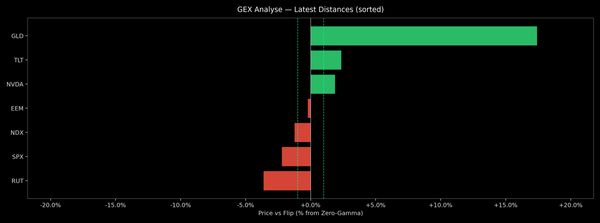
- US equity futures (ES -1.7%, NQ -2.3%, RTY -2.5%) are mirroring the performance of their European counterparts, despite closing with gains on Monday.
- The US is considering capping NVIDIA (NVDA) H200 sales to 75,000 per Chinese buyer. AMD's (AMD) MI325 chips would also be subject to the US AI accelerator cap.
FX
- The DXY is continuing to rise amid the turbulent geopolitical environment and recent US commentary suggesting no near-term resolution to the conflict. The IRGC is threatening ships attempting to pass through the Strait of Hormuz, while President Trump has warned of larger strikes against Iran. The DXY is currently at the upper end of a 98.43 to 99.22 range, trading at levels not seen since late January 2026. A further increase could lead to a retest of the January 19 high at 99.47, followed by the 99.50 level.
- The EUR and GBP are under pressure due to the ongoing conflict, as both are net importers of energy. The EUR saw modest gains following the higher-than-expected HICP, but this is somewhat outdated given the ECB will likely need to consider the inflationary and growth impacts of higher energy prices. UK traders will be focused on the UK’s Spring Statement, which is likely to be a non-event, with attention remaining on the OBR, DMO forecasts, and the implied headroom for Chancellor Reeves.
- The CHF is underperforming against its peers. Switzerland is a net importer of energy, and the downside is exacerbated by reports that the SNB is increasingly prepared to intervene, which offsets haven-related strength that would otherwise be expected during geopolitical turmoil. The JPY is also weakening against the USD, with USD/JPY trading around 157.82 and approaching the speculated intervention zone of 158-160. Further upside could lead to renewed jawboning by Japanese officials. Japanese Unemployment ticked slightly higher in January, but had little impact on the currency.
FIXED INCOME
- Fixed income benchmarks are under pressure as energy prices continue to rise, pushing yields higher. This is sparking a hawkish repricing for central banks, with the near-term odds of a BoE rate cut decreasing significantly and ECB pricing implying a small chance of tightening by the end of 2026.
- Bunds are down by as much as 88 ticks, reaching a trough of 128.75. If the move continues, the next levels to watch are 128.03 from the week of February 13th, followed by a cluster of lows from the first few weeks of the year between 127.51 and 127.82. Below those, the year-to-date base is 126.98, followed by the 126.75 March contract low.
- Gilts gapped lower by 54 ticks and then fell almost a full point to a trough of 91.58, down by as much as 143 ticks. This pressure is a function of the energy narrative. The odds of BoE easing in the near term have decreased significantly, with pricing now indicating less than a 50% chance of a March cut, compared to approximately 85% at the end of last week.
- The UK docket is theoretically headlined by the Spring Statement, but Chancellor Reeves is expected to deliver a non-event. Nonetheless, the forecasts and DMO remit will be of note.
- USTs are moving in the same direction, although the magnitudes are less pronounced than those of their UK and German counterparts, down to a 112-24 base with losses of approximately 13 ticks. The docket includes a few data points before Fed speeches from Williams and Kashkari (2026), with a text and Q&A expected from both. However, any fresh geopolitical escalation or moderation will dominate the narrative.
- Germany sold EUR 3.825 billion of 2.50% 2031 Bobl against an expected EUR 5.0 billion, with a bid-to-cover ratio of 1.19x (previous 1.65x), an average yield of 2.43% (previous 2.40%), and a retention rate of 23.5% (previous 23.8%).
- Japan sold JPY 2.04 trillion of 10-year JGBs, with a bid-to-cover ratio of 3.30x (previous 3.02x) and an average yield of 2.122% (previous 2.249%).
- Australia sold AUD 300 million of March 2047 bonds, with a bid-to-cover ratio of 4.7 and an average yield of 5.1378%.
COMMODITIES
- WTI and Brent futures remain firmer within USD 70.41-74.19/bbl and USD 76.74-79.27/bbl, respectively, with prices supported as the conflict in Iran entered its fourth day. The IRGC is threatening to attack any ship attempting to pass through the Strait of Hormuz, while US President Trump has warned of larger strikes against Iran.
- Natural gas has been in focus due to the upside from the conflict, further exacerbated by Qatar's halting of output yesterday. Qatar accounts for roughly one-fifth of global LNG supply. Analysts warn that every week of downtime removes 1.6-1.8 million tons of LNG from the global market. Dutch TTF is currently trading up 23% intraday at EUR 54.805/MWh, compared to around EUR 32/MWh on February 27th.
- Precious metals are trading slightly lower. Silver is facing a steeper drop, down 4.6%, while spot gold is down 0.4%. XAG and XAU are trading within the narrow ranges of USD 5,284.62-5,292/oz and USD 84.84-85.13/oz, respectively. Continuous dollar strength continues to hamper gains in the precious metals space despite weaker global risk sentiment amid geopolitical tension between the US and Iran, which increases haven demand for precious metals. Some analysts also suggest that profit-taking has been the key driver behind the slight pressure on the yellow metal. BMI forecasts that gold should rise above USD 5,600/oz this week, with further upside to USD 5,850-6,500/oz if the conflict lasts 2-3 weeks.
- Base metals are also lower, hampered by global risk sentiment amid geopolitical tension between the US and Iran. 3M LME copper is trading within the lower range of USD 12.798-13.281k/t.
- The IAEA has confirmed recent damage to entrance buildings of Iran's underground Natanz fuel enrichment plan.
- US President Trump will meet with US Treasury Secretary Bessent and the Energy Secretary Wright at 14:00 EST/19:00 GMT on Tuesday.
- A Fox News reporter citing US Central Command said the Strait of Hormuz is not closed despite the IRGC pronouncement.
- Oil production at Kazakhstan's Tengiz (CVX) field reportedly dropped by 30% on March 1st from February's average output to 415k/BPD, according to sources.
- Turkey is reportedly assessing the revival of a fuel tax mechanism aimed at cushioning consumers from rising oil prices, according to Bloomberg, citing sources.
- Russian oil product exports from the Black Sea port of Tuapse are planned at 755k tonnes in March, compared to 312k tonnes in the February schedule, according to traders.
- India is reportedly rationing natural gas supply to industries following Qatar's halting of production, according to sources.
- Some Asian oil refiners are reportedly considering run cuts of 20-30% amidst the Middle Eastern conflict and the difficulties relating to shipping through the Strait of Hormuz, according to Bloomberg, citing sources.
- Oman has announced that fuel tanks at the commercial port of Duqm were attacked by several drones, according to Sky News Arabia. The damage has been contained, according to Al Jazeera.
- Morgan Stanley has stated that it remains bullish on aluminium prices, forecasting the price to reach USD 3,700/t in FY 2026.
TRADE/TARIFFS
- US Treasury Secretary Bessent and Chinese Vice Premier He Lifeng are expected to convene in Paris at the end of next week to discuss bilateral matters, according to Bloomberg.
- US and Chinese trade negotiators are to meet in mid-March prior to the Trump-Xi summit.
NOTABLE EUROPEAN HEADLINES
- Two UK government-aligned think tanks are reportedly working on options to reform student loans, according to Politico, citing sources.
NOTABLE EUROPEAN DATA RECAP
- EU Core Inflation Rate YoY Flash (Feb) Y/Y 2.4% vs. Exp. 2.2% (Prev. 2.2%).
- EU Inflation Rate YoY Flash (Feb) Y/Y 1.9% vs. Exp. 1.7% (Prev. 1.7%); Services 3.4% (prev. 3.2%).
- EU Inflation Rate MoM Flash (Feb) M/M 1.7% (Prev. -0.6%).
- Italian Inflation Rate MoM Prel (Feb) M/M 0.8% vs. Exp. 0.2% (Prev. 0.4%).
- Italian Inflation Rate YoY Prel (Feb) Y/Y 1.6% (Prev. 1.0%).
- Worldpanel UK grocery inflation (4-weeks to Feb 22nd) 4.3% (prev. 4.0%).
- UK BRC Shop Price Inflation (Feb) 1.1% vs. Exp. 1.2% (Prev. 1.5%).
- Turkish Inflation Rate MoM (Feb) M/M 2.96% vs. Exp. 3% (Prev. 4.84%).
- Turkish Inflation Rate YoY (Feb) Y/Y 31.53% vs. Exp. 31.55% (Prev. 30.65%).
CENTRAL BANKS
- Fed Chair nominee Warsh’s attempt to shrink the Fed's balance sheet would proceed slowly due to resistance over scaling back one of the Fed's most powerful tools, according to the FT.
- BoJ Governor Ueda stated that the BoJ will conduct technical experimentation on settlement using central bank money in the form of current account deposits on a blockchain-based system.
- ECB's Stournaras said that if the conflict in Iran continues, there will be upward pressure on Eurozone inflation and that there is no rush to change rates.
- ECB's Villeroy said that French economic exposure to tensions in the Middle East is limited and that it would be a mistake to predict a rate move in a hurry.
- ECB's Lane warned that a prolonged conflict in the Middle East and a persistent decline in oil and gas supplies could cause a “substantial spike” in inflation and a sharp fall in output in the Eurozone, according to the FT.
- RBA Governor Bullock said that underlying demand in the economy is further from supply potential than they had assessed and that a large part of the unexpected increase in inflation was sector-specific. Policy is well-positioned to respond if needed.
- Riksbank's Thedeen said that inflation is close to target, interest rates have come down, and the labour market has started to improve. Core inflation may trail the forecast in 2026.
- The PBoC purchased CNY 50 billion worth of sovereign bonds in February on the open market.
NOTABLE US HEADLINES
- Two leading Republican senators are reportedly asking the Trump administration to pass a USD 200 billion tax cut without congressional approval, according to the Washington Post, citing a draft. The GOP seeks to improve its economic approval rating ahead of the mid-term elections. The senators, including Ted Cruz and Tim Scott, aim to reduce some of the taxes paid on capital gains.
GEOPOLITICS
MIDDLE EAST
- Israeli defence forces announced that they did not deploy ground troops in Iran, according to an Israeli source.
- The IDF announced that they have struck Iran's leadership compound in Tehran.
- The IAEA has confirmed recent damage to entrance buildings of Iran's underground Natanz fuel enrichment plan.
- Israel's Home Front announced an early warning after the detection of rockets fired from Iran toward Israel, according to Al Jazeera.
- An Israeli Military Spokesperson said that it is not likely that Israel will deploy ground forces to Iran as it is not practical.
- An IDF spokesperson said that launches were detected from Iran and alerts are expected in the northern area from the Golan to northern Sharon.
- Iran's military said it targeted the Al Udeid base with missiles.
- Iran's IRCG said they targeted the aircraft carrier "Lincoln" with 4 cruise missiles. The aircraft carrier "Lincoln" headed towards the southeastern Indian Ocean, according to Al Arabiya.
- A member of Iran’s Assembly of Experts said that choosing a successor to Supreme Leader Khamenei “won’t take long”, according to ISNA.
- Hezbollah said it targeted the Ramat David Air Base in northern Israel.
- US VP Vance said that President Trump wants to make sure Iran never has nuclear weapons, adding that the US has a lot of capacity in Iran.
- US President Trump held a call with Kurdish leaders in Iraq on Sunday to discuss the US-Israel war with Iran and what might come next, according to three sources with knowledge of the call cited by Axios.
- The US is said to be preparing for a 'pickup' of attacks in Iran during the next 24 hours, according to CNN.
RUSSIA-UKRAINE
- Russian Kremlin spokesperson Peskov, regarding Ukraine talks, said that it is hardly possible to talk about a meeting, adding that there is no certainty on venue or timing.
CRYPTO
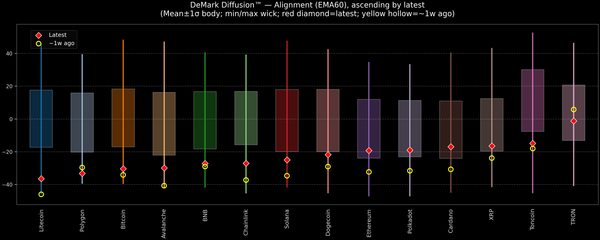
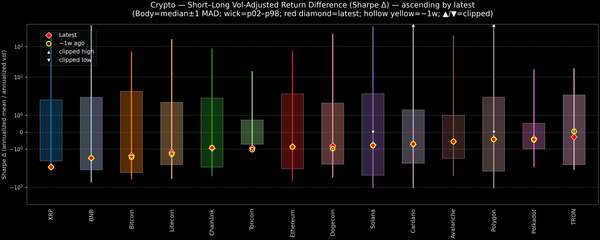
- Bitcoin continues to pull back, falling just shy of USD 66,000.
APAC TRADE
- APAC stocks were pressured with risk appetite weighed down by geopolitics as the Iranian conflict entered a fourth day, and with US President Trump warning of larger strikes to come.
- The ASX 200 was led lower by weakness in mining and materials, with broad weakness seen in nearly all sectors aside from energy and financials.
- The Nikkei 225 slumped beneath the 57,000 level amid the Iranian conflict and global disruption, with sentiment also not helped by a rise in the unemployment rate and as higher energy prices stoked inflationary concerns, which could narrow policy space for the BoJ.
- The Hang Seng and Shanghai Comp traded indecisively with price action initially rangebound, before eventually succumbing to the risk-off mood, while there was a fairly substantial liquidity drain by the PBoC, and participants continue to await China's annual Two Sessions conclave.
NOTABLE ASIA-PAC HEADLINES
- Japanese PM Takaichi said that the chances of a supplementary budget are not zero.
- Japanese Finance Minister Katayama said that he sees large market volatility on the Middle East situation, while Trade Minister Akazawa said that he is watching impacts on prices including energy and will take steps to ensure the economic impact is minimal.
NOTABLE APAC DATA RECAP
- Japanese Unemployment Rate (Jan) 2.7% vs. Exp. 2.6% (Prev. 2.6%).
- Japanese Jobs/applications ratio (Jan) 1.18 vs. Exp. 1.19 (Prev. 1.19).
- Japanese Capital Spending Ex. Software YY (Q4) 7.3% (exp. 3.9%).
- Japanese Capital Spending YoY (Q4) Y/Y 6.5% vs. Exp. 3% (Prev. 2.9%).
- Australian Building Permits MoM Prel (Jan) M/M -7.2% vs. Exp. 5.5% (Prev. -14.9%).
- Australian Building Permits YoY Prel (Jan) Y/Y -15.7% (Prev. 0.4%).
- Australian Private House Approvals MoM Prel (Jan) M/M 1.1% (Prev. 0.4%).
- South Korea S&P Global Manufacturing PMI (Feb) 51.1 (Prev. 51.2).
- New Zealand Building Permits MoM (Jan) M/M 1.9% (Prev. -4.5%).